

Another Look at Star Vanguard

Space…the final frontier.
Star Vanguard has become the all-engrossing gaming project of my life. It’s my Lord of the Rings, my Mad Max: Fury Road, my Star Wars, my Trouble With Tribbles.
It exists simply as a platform for ideas and worldbuilding on a grand, final scale, something I’m not developing for any attempt at profit, something that just exists and "lives rent free” in my brain. It has so many moving parts it’s hard to keep track of them and they are all evolving as I burrow deeper into the hobby of tabletop gaming and storytelling.
Anyone who has followed my blog with any interest over the last year is already aware of the time I have put into it. I won’t relay how it began and where it has gone. Traveller5 has become the living membrane by which it is all connected and constructed. I just wanted to go over the current state of it as a vision, specifically how it connects with gaming, and where I hope to see it go from here.
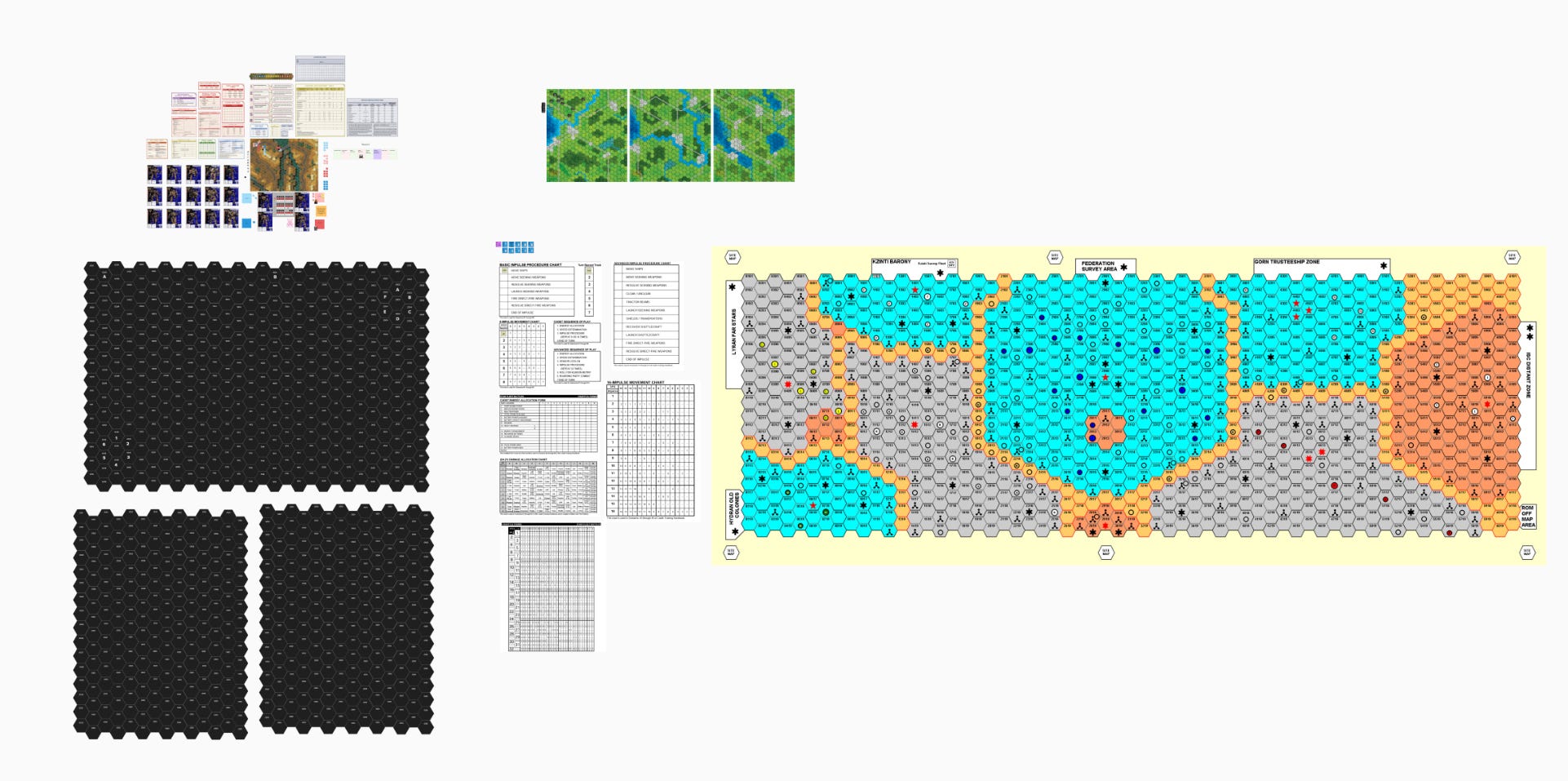
This is the current broad stroke overview of the Mural I have been chipping away at. Some things have been removed, and new things have been implemented.
The original idea was that it was going to be an ongoing campaign with Traveller Classic fulfilling the role of personnel level roleplaying while several other game systems covered various conflicts across a galaxy I had, at that time, not populated to any sufficiently satisfying level. It was a big idea that just didn’t have britches and I was grasping at straws to squeeze some things together that weren’t working. Some things still are, and I have a feeling they will continue too, and other things have been replaced. What was going to be a somewhat linear series of games I would play to flesh out this universe of mine has also changed. HOW I will engage from a play perspective is a little more nebulous now. That hasn’t been my main concern. My focus has been building a platform to scaffold up a Star Trek-like world that can handle all scales of that process with some sufficiency. The real pivot point here, which I have already shared, is the Union Commonwealth, my first established sector in the Star Vanguard milieu. One I am so pleased with and locked in on to such a degree that I invested no small amount of time, and some small amount of money to create a printed poster on nice glossy paper to cement it in reality so that even if I wanted too, I couldn’t possibly escape it. For some reason, things feel more “real” or of more import when they are on a big sheet of paper staring you in the face.
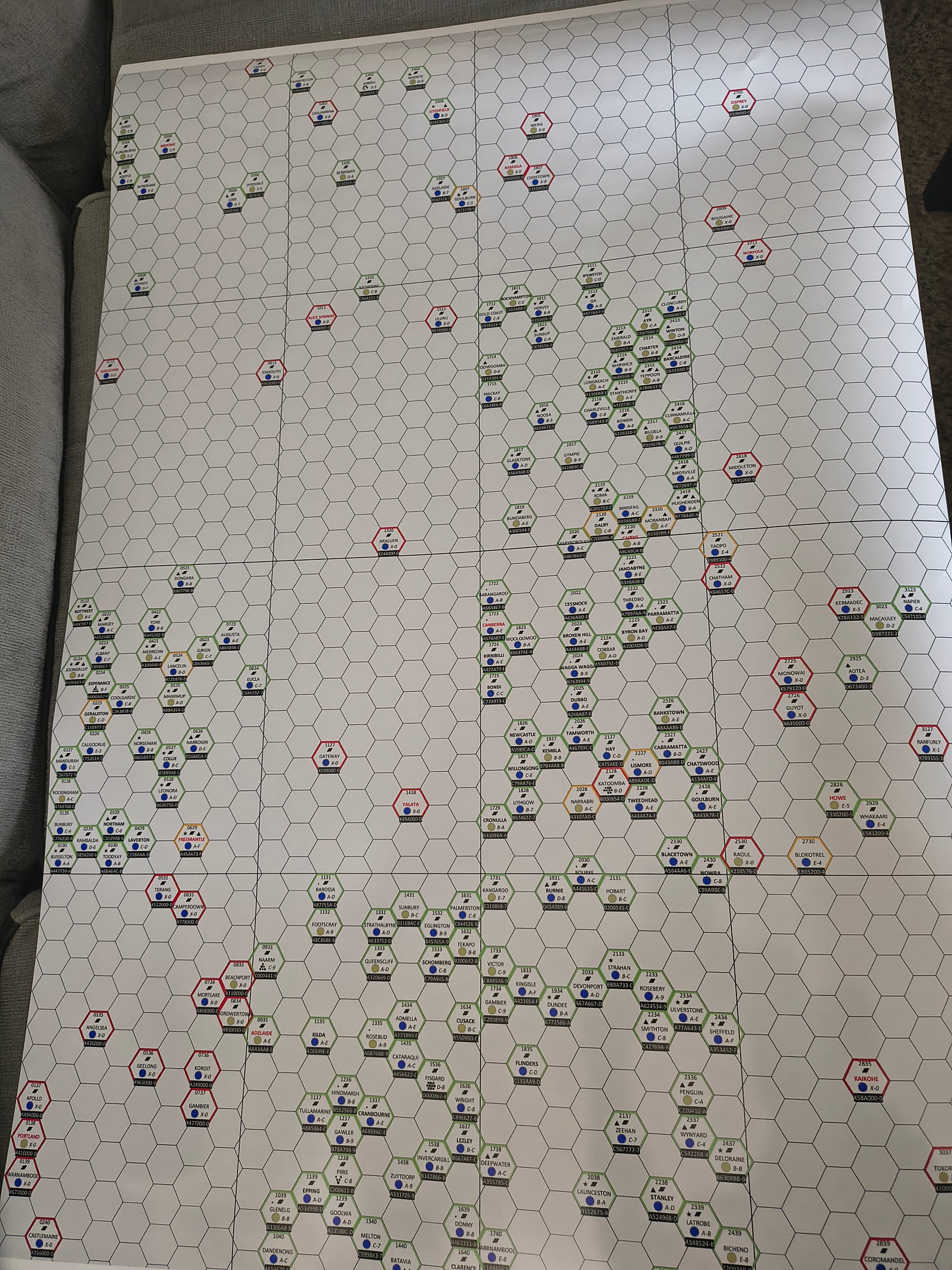
There are no trade routes here but that was an intentional choice. It’s an easy and satisfying process to generate them. But those are the kinds of details for which I am embracing Marc Millers philosophy of building only what you need, when you need it, and the map itself is enough inspiration to engage me in the thought process of how it actually functions in the context of the galaxy.
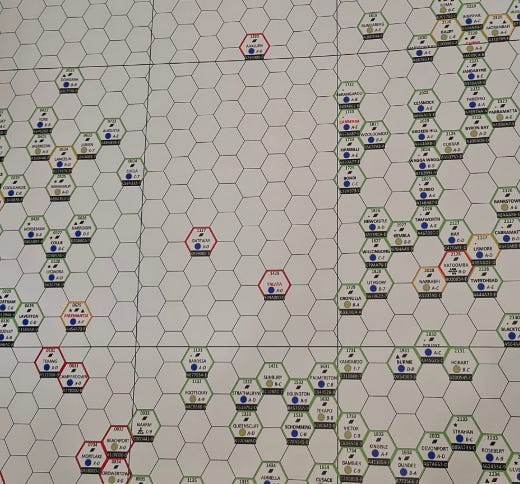
For example, I do know that the length of this civilizational J curve has a break in the center where it is largely cut off by more hostile and unforgiving systems, but that this subsector in the center with two lone systems is a passage of travel called the Gateway Strait. It’s also where the first Star Vanguard story will be set. Because this map was generated based on geography, specifically the geography of a landmass that is largely desolate, it produced a really distinct and obvious set of choices for logical lanes of travel. If you have any interest in space-faring science fiction at all, it’s not hard to look at it and imagine the possible scenarios that may happen within.
This has been the real reward of generative systems is that I don’t have to produce details whole hog for this. The systems themselves do the work of providing a template that I can then work within, limitations and all, to extrapolate upon. It makes it a much friendlier and more engaging process than starting with nothing and asking, how the hell do I get to home base from here?
Traveller5 is almost excessively useful in this regard precisely because it is designed explicitly for this purpose. I haven’t imagined much that it isn’t capable of helping me work out, and my reading of it has shifted far, far away from understanding it as a “game” and instead understanding each system it provides and how they interlink with one another to allow for the construction of a consistent universe. I think this was always the intent of Marc Miller, and I’ll go to my grave saying that the people who have dismissed it as a “failure” either fail to understand it’s language or approached it with the expectation of it being “yet another RPG rulebook”. It is not. It’s something else, that also gives you a couple of dozen pages of rules to run an RPG that jells naturally with the something else that it is. It’s application as a standalone game has become the least interesting thing about it, though that application is possible, and can be summed up in a much smaller PDF document for anyone who wants to peruse its basic systems. If you are buying it just as another run-of-the-mill system for light space adventures, don’t even bother. It would be like buying a cruise ship just to use the onboard hot tub; it’s absolutely the least of what T5 is capable of doing.
But, I’ll digress. In order to properly talk about T5 from an analytical perspective, using it was essential, and that is precisely what I have been doing, and precisely why a dedicated set of blogs to T5 have not been forthcoming. It’s just so damned big that to do it any justice will require dozens more hours on top of the dozens I have already spent with it. But a quick look at scale, specifically on a planetary level.
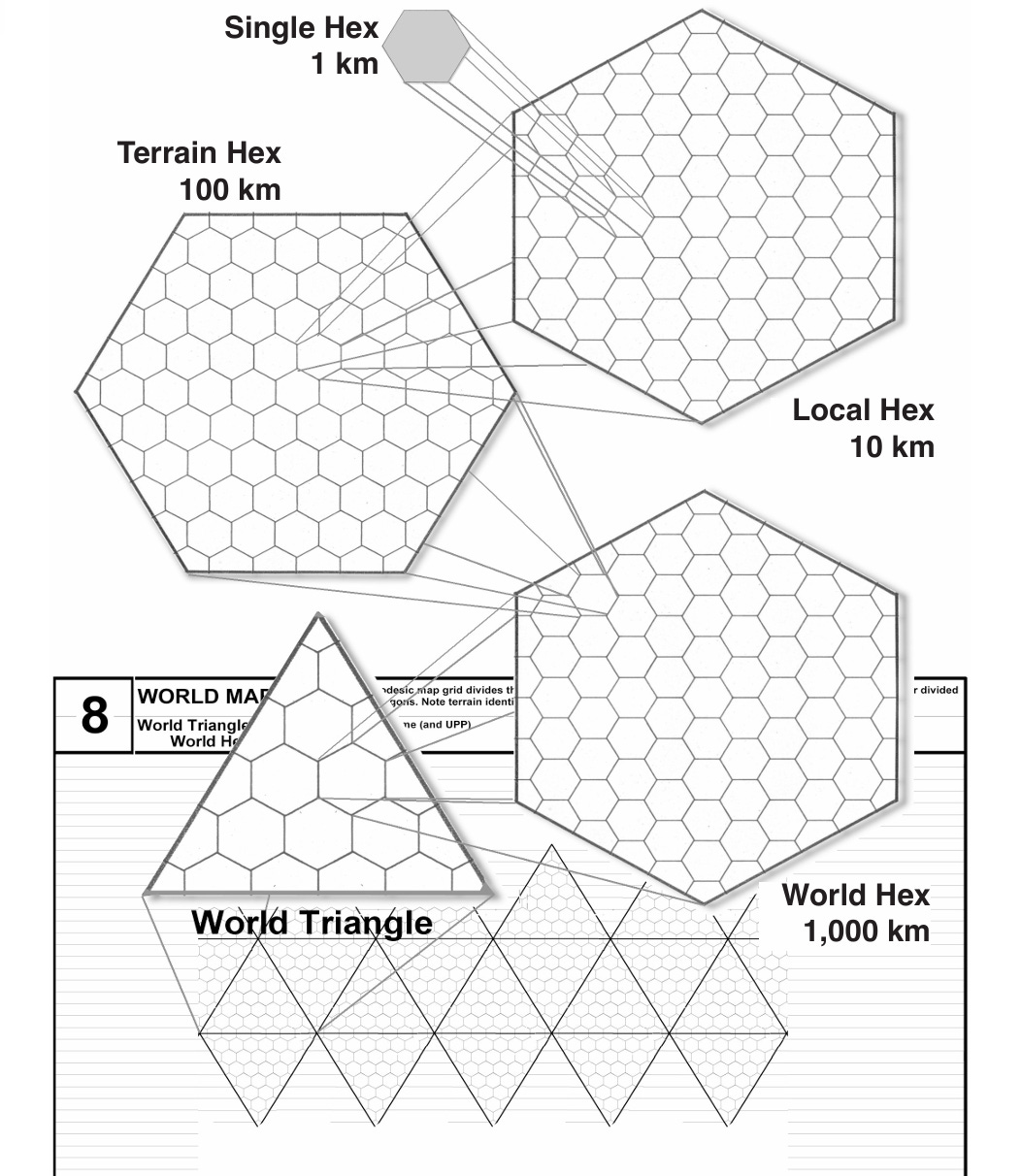
As I’ve said prior, my plan was to have different systems in place that would handle combat at various scales. I hadn’t really cemented what those scales would be but prior to T5, it was broken down into galactic, system, planetary, and skirmish. The intent was to leverage Space Empires for galactic scale conflict, Talon for ship to ship, OGRE for planetary operations, and then Battletech/Traveller for smaller squad oriented conflicts. But not being tied firmly to any set of parameters, it was loose and up in the air.
This image right here along with sub-sectors and system generation cover the bases enough to put a firm foothold on how these things should be addressed, which systems to use, and which scales they are tied too. After a lot of consideration, Space Empires is off the table, and Talon probably is too. Space Empires is a true 4x about starting in an empty space and exploring each hex, but Traveller does that just fine. What I needed for galactic scale intrigue was a system that offered depth, flexibility, and where the existing strata of borders and relationships was already established.
Enter Federation & Empire.
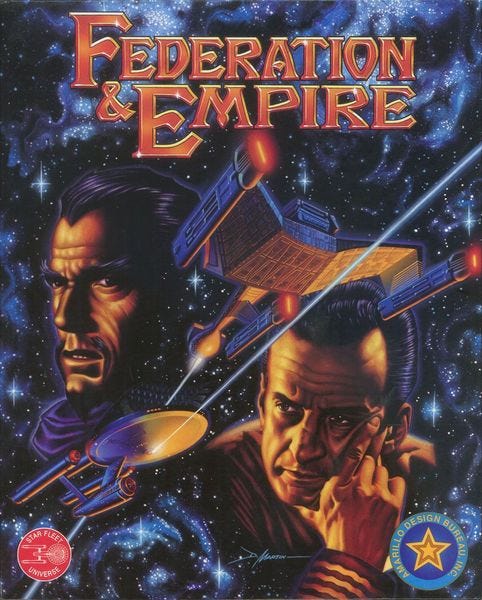
If I didn’t already respect Amarillo enough due to Amarillo Records, here is an Amarillo based company that is doing something spectacular. They are the keepers of the popular Star Fleet Battles and other products which share a limited use of the Star Trek licensing. I’m working backwards a bit here, but essentially, Federation and Empire is a grand strategy game on a tremendous scale, with thousands of included counters in the box, one of those games similar to World in Flames where you set it up on a table and play it over a long period of time. It’s also the kind of game where the contents of the box are insufficient almost immediately after a couple of turns according to what I have read online because you will be manipulating stacks upon stacks of little ship counters as you manage an economy which allows you to build even more every single turn.
In that way, adapting it to my mural space will be both a blessing and a curse.
That is to say, it will be an absolute fucking nightmare to make the initial sets of counters required, but after that, an absolute breeze to run since I can duplicate them infinitely to my hearts content.
But I only discovered Federation & Empire and decided upon it as the way to have an ongoing set of sector-oriented conflicts that will essentially form an political history of Star Vanguard, as I have stated before, until it is complete and spans sufficiently the thousands of years of time over which this campaign/story generation apparatus takes place, or until I am dead, me being dead of which will certainly come first.
Because the thing is, this is just one “period” of three essential periods in the Star Vanguard timeline, one that is set roughly 270 something thousand years in the future. Procyon Frequency, which was the genesis of Star Vanguard, was set about a thousand years in our own future and was planned as three video games in the vein of Star Control that would cover a roughly 500 year period. But it also had a definitive ending. This Star Vanguard campaign, which probably needs its own unique name, is on the opposite end of the galaxy over 250 thousand years after the end of Procyon Frequency. And the third and final point in the Star Vanguard timeline is some 35 million years beyond that, yet somewhere else entirely, and where my METLHED fiction takes place, and it is a bizarre iteration of the universe indeed, one more akin to the Warhammer 40,000 universe about a war spanning two galaxies.
As you can see, I’ve wasted quite a lot of brainpower on this over the last two years.

Anyways the reason I chose Federation & Empire besides the fact that Jeffro Johnson mentioned it on his blog is because it is intimately tied to Star Fleet Battles.
Just for a moment I really want to take a second to appreciate the work Jeffro has done in the game space. I understand people don’t like him. He goes out of his way to make himself imminently unlikeable and he is vocal about that. BROSR gameplay is something I spent a good amount of time experimenting with but scratched the surface on, and it’s so far removed from my current interests, that I really have no place to talk much about it. But honestly, Jeffro’s blog, to me, is the most interesting thing Jeffro has contributed to the space. When it comes to game design and analysis, I don’t care if you are Nimdok from I Have No Mouth - a good idea is a good idea, good writing is good writing. Jeffro’s biggest crime is that he is the gaming equivalent of Ash from Army of Darkness, but let’s be honest; there are a lot of people in this space who are loud-mouth braggarts. I had heard of OGRE and Star Fleet Battles before Jeffro, but I was never interested in them until Jeffro. His coverage of Federation & Empire is decidedly scant, as far as I can tell only encompassing a single post on his website, but because it is coming from him, and he is sufficiently knowledgable about wargaming probably even more than roleplaying games (if you even want to make that distinction) once was enough for me to buy the rulebook and peruse it for myself.
But Star Fleet Battles is probably the single most exciting system I have dug into and that has something to do with the fact that it is on a scale of complexity venturing close to Advanced Squad Leader, which was a game I devoted a few years to learning. I played it regularly with a mate from Scotland until he fell off the face of the Earth, and I can say it is the most complex tabletop game I’ve ever explored. But the subject matter of SFB is one I find more engaging in general both as a long-time casual Star Trek fan and as someone who likes checking off tiny boxes on sheets of paper.
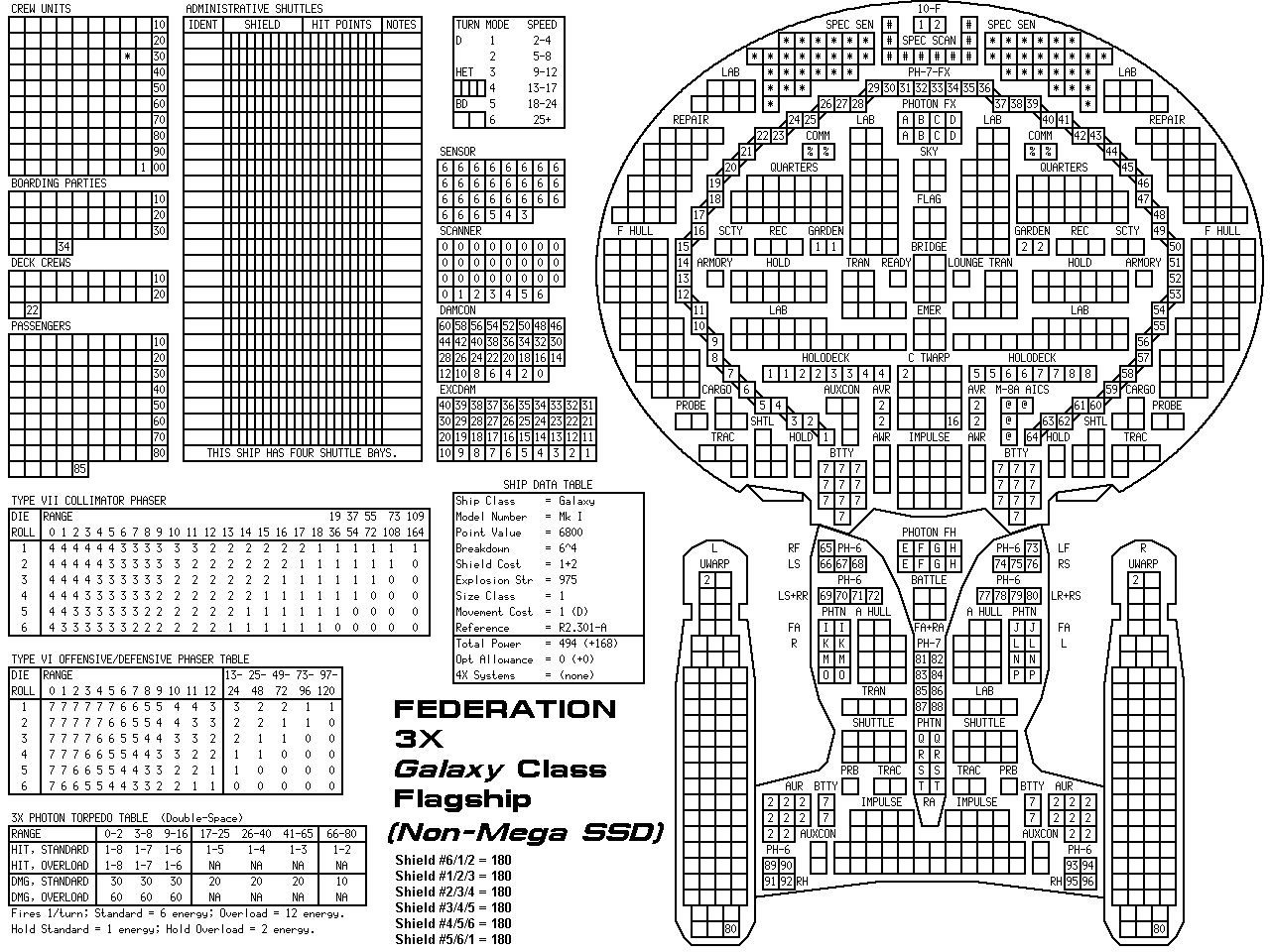
This is an excessive example to illustrate the point. But the last few nights I have been reading the Cadet's Handbook, a graciously freely produced document that acts as an introductory ruleset for SFB. Although Federation & Empire has its own resolution system for the massive scale of the combat it is covering, because it has all the same ships it is possible to resolve combat situations by dropping them directly into SFB. Of course it would balloon the game to something you are playing over years rather than days, weeks, or months most likely, since a single battle in SFB with multiple ships per side can itself take days to resolve, but the beauty of this project is that nobody can tell me what to do with it. So it’s likely that broad strokes will be covered by the systems in F&E and that more important single ship battles by SFB.
These two systems, regardless of how much they are simplified, are enough to cover everything on a galactic scale. And anything that needs to be covered on a system-to-system or interplanetary level, Traveller5 alone is more than capable of filling the gaps of using it’s own orbital charts and range-band abstracted combat system or something more granular like the vector-based combat a lot of people choose to use.
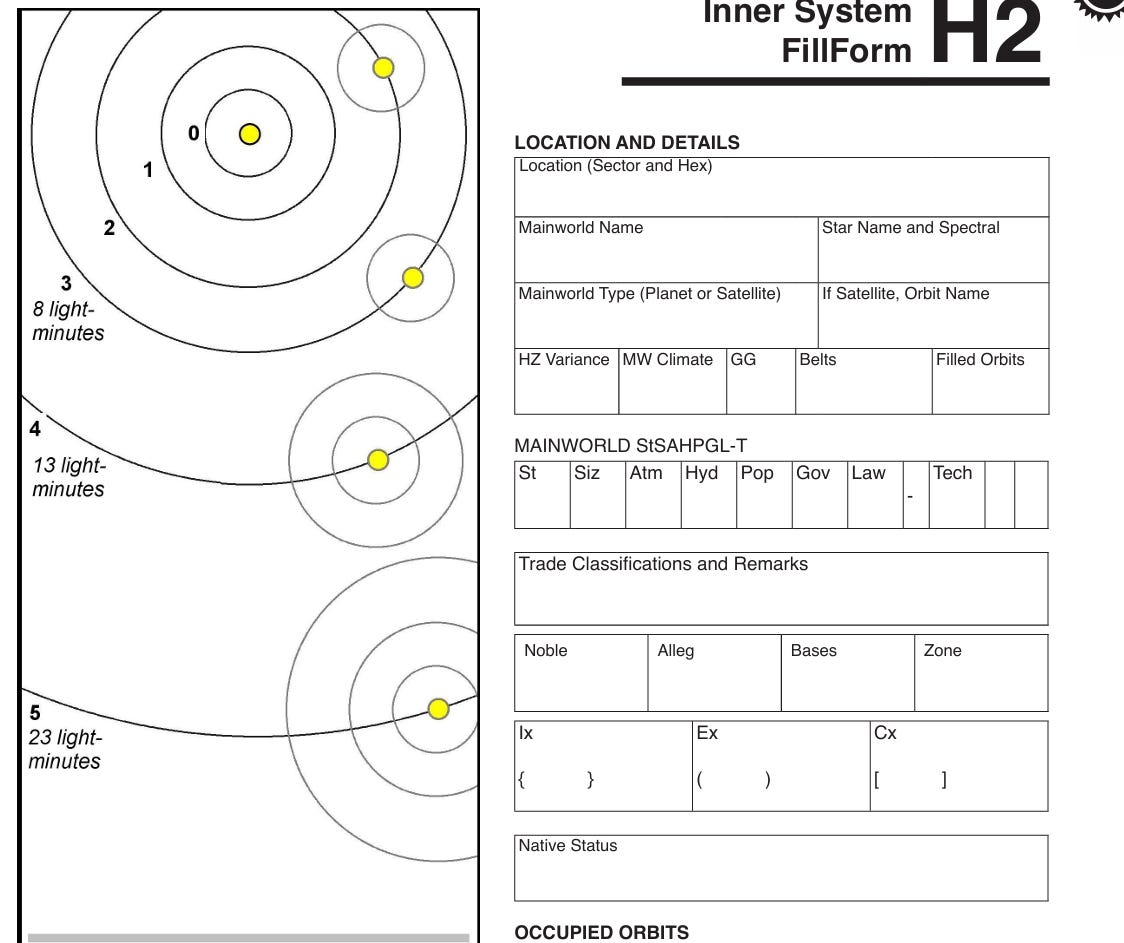
How to intermesh them requires some assumptions and concessions. For one, it is assumed naturally that the maximum tech-level of Star Vanguard is far far beyond the general tech level of Classic Traveller.
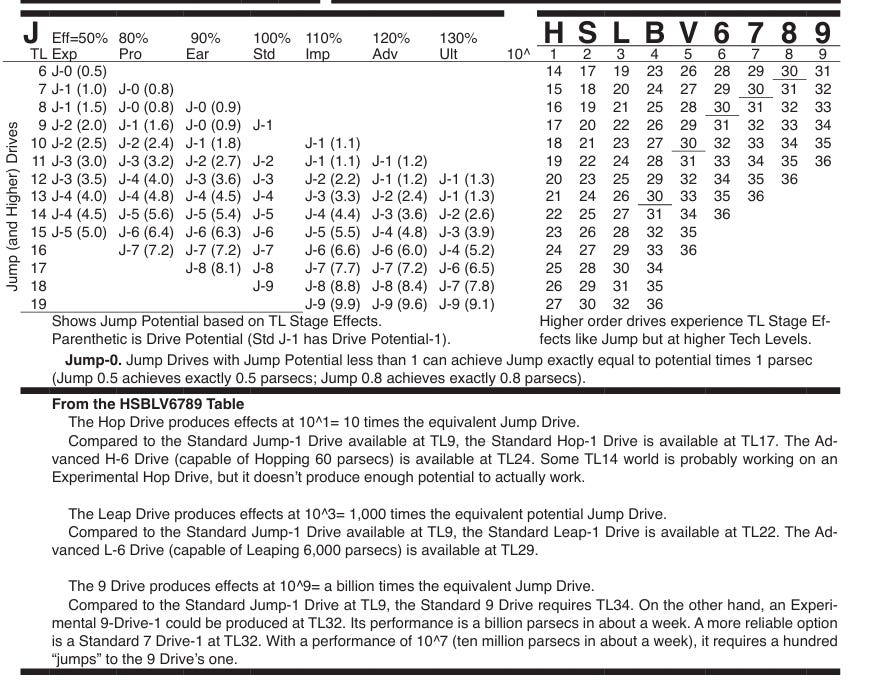
It’s a ludicrously massive leap from Traveller level tech to Star Trek tech but again, the beauty of T5 is that it allows for such a leap, placing it far outside the universe Traveller is tied too. This is a game that has thought of every imaginable possibility as much as is possible in the breadth of 1000 pages of content. This level of detail makes me giddy.
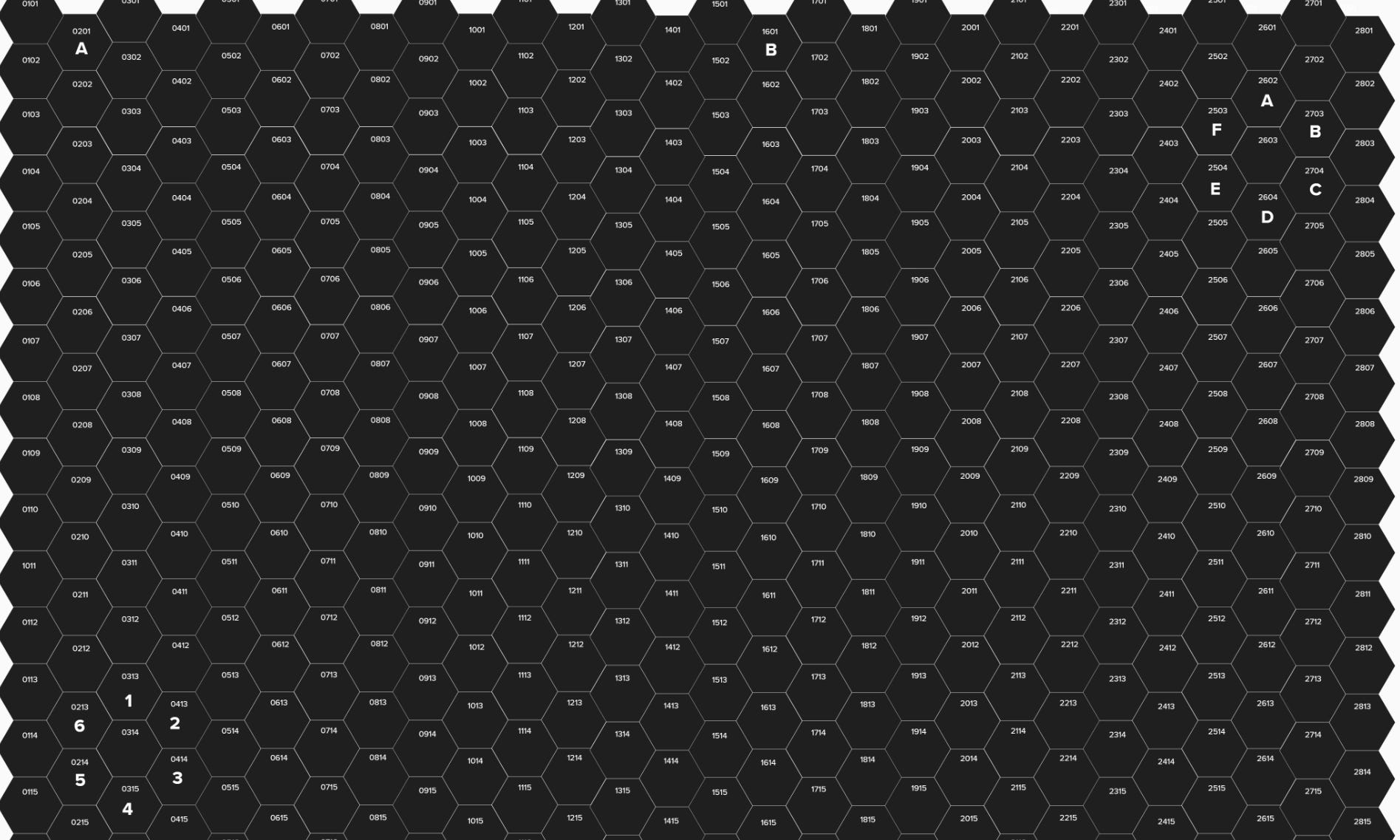
The other thing I like about SFB is that it’s very easy to adapt to mural since the map is just…this. Each hex is 10,000 km in distance, and SFB doesn’t care how many ships inhabit a single hex as a result. This is about half of the available map space covered in the Cadet’s Handbook. The rest is there but I still have the task of painstakingly marking every hex in it with the appropriate identifying number. Certainly the least amount of fun I’ve had doing this, but you do get into a kind of flow state.
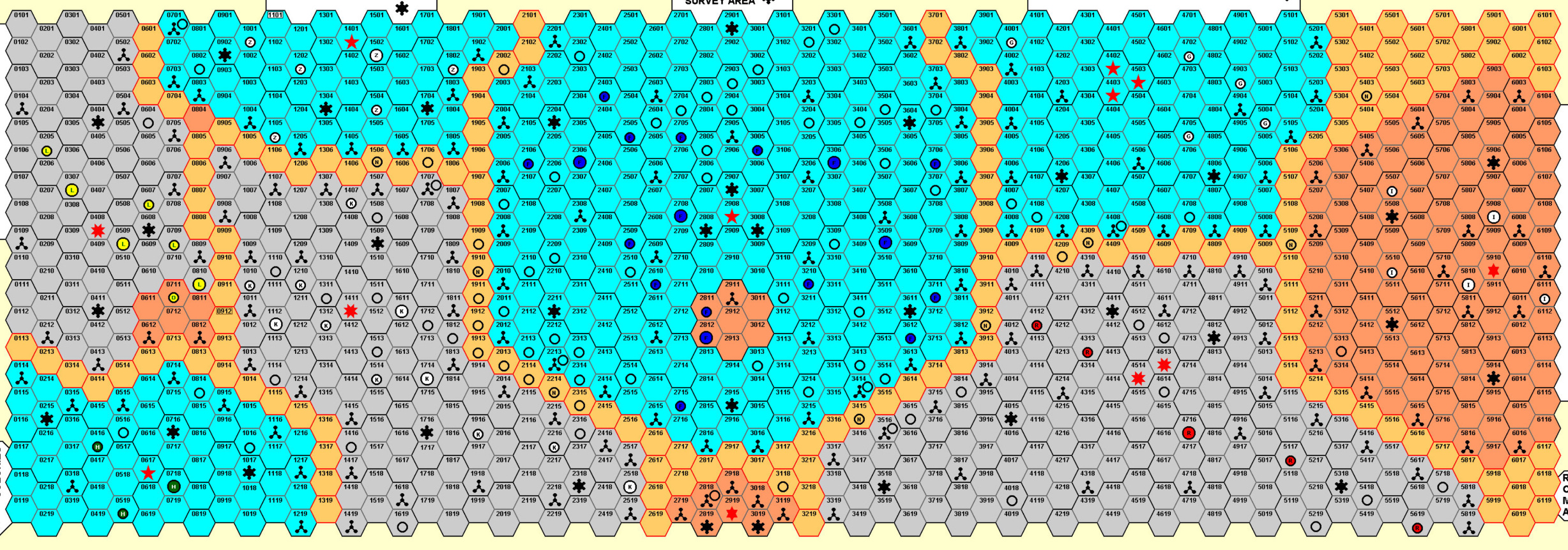
Also here imported wholesale from a PNG is the standard map for Federation & Empire. Once I have produced the remaining sectors in my galaxy, I’ll have to transpose them into a similar map. Originally I had estimated there would be about 14, but the prospect of that was an exercise in excess, so I’ve decided to keep them roughly equivalent to this map, and stick with 6. 6 is enough, and it means that owning a printed version of my entire galaxy will only cost about 300 bucks in printing costs all in.
This is where we get down to the planet level. I’m glossing over a bunch of stuff here, like how to convert Traveller ships to SFB, and the short answer is that it will kind of be the opposite, with ship types roughly following the SFB structure rather than the other way around. For games following a single group on a single vessel, especially proverbial “space trucks”, it will largely stick within the parameters of T5 to address that. That being said there are some incredible deck plans people have made for capital sized ships from Star Trek that would work within Traveller, and they are not trivial in any sense. The website Cygnus-X1.net has a good example of it, but some of it’s links lead to places of a…nefarious nature, and could have gotten me fired when I clicked on them, so I’m hesitant to link to it directly. But here are a couple of examples.
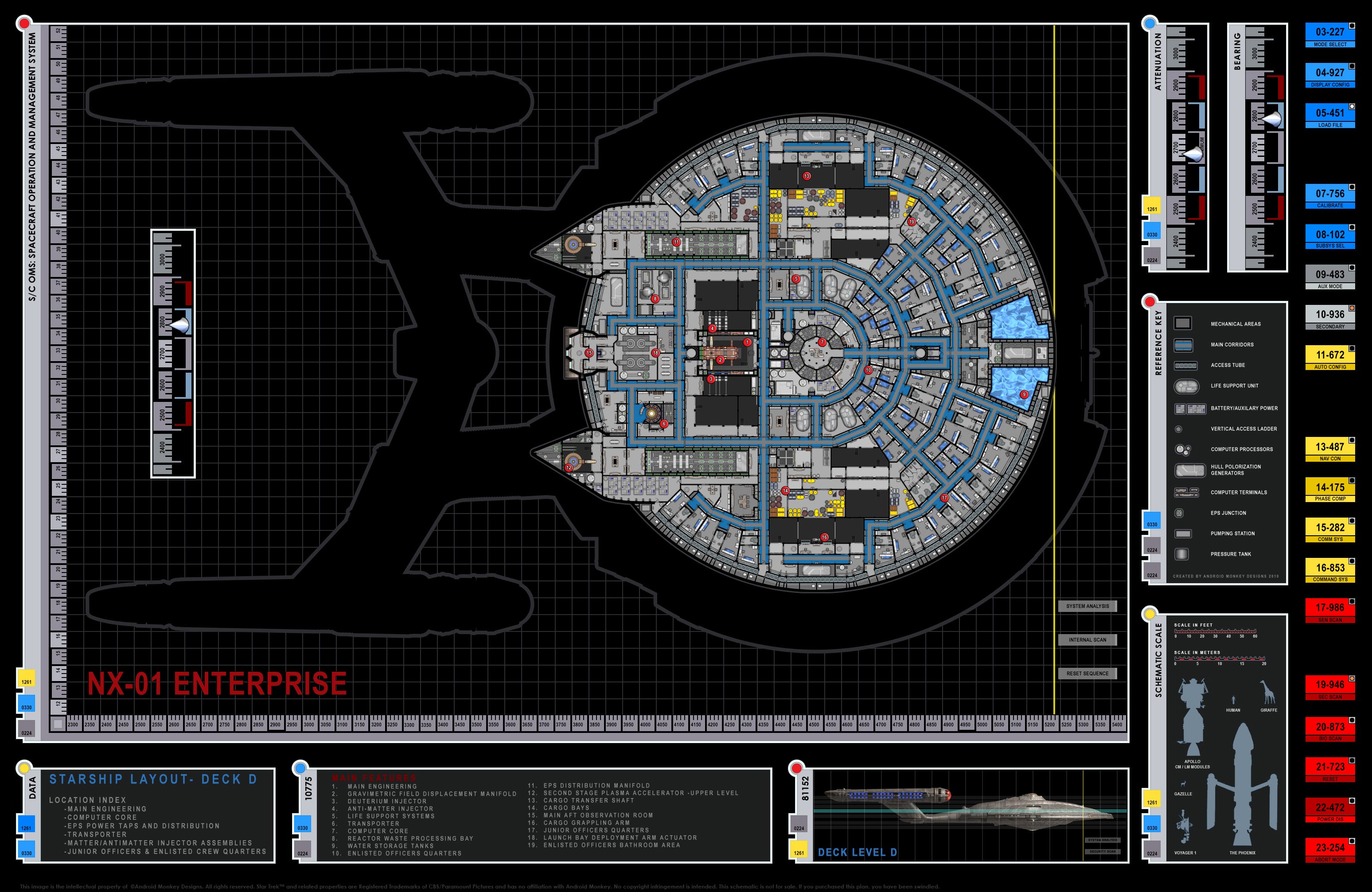
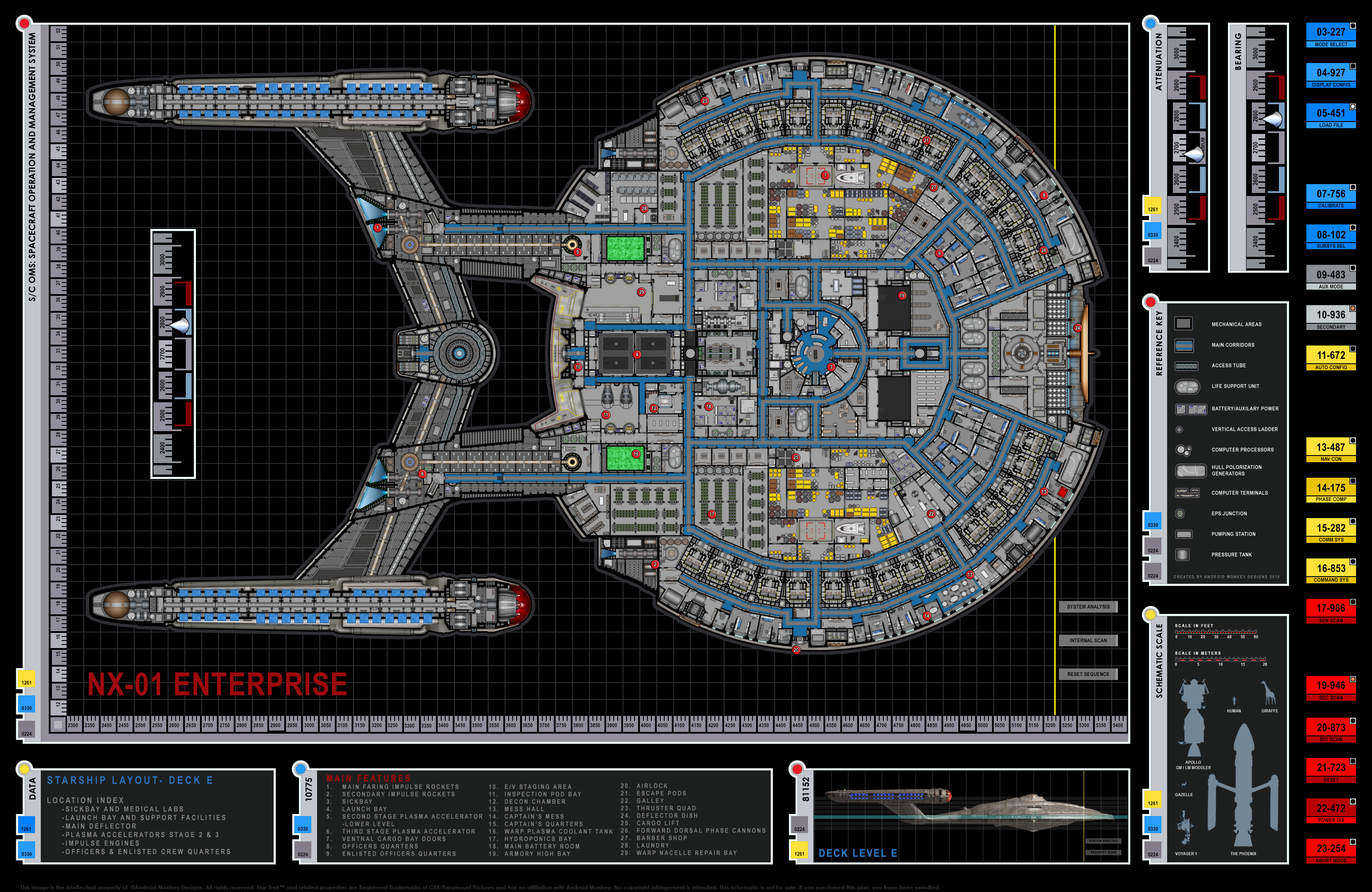
The entire NX-01 is available here referenced in a descending z-axis of cross-sections. And it is absolutely glorious, as you can see.
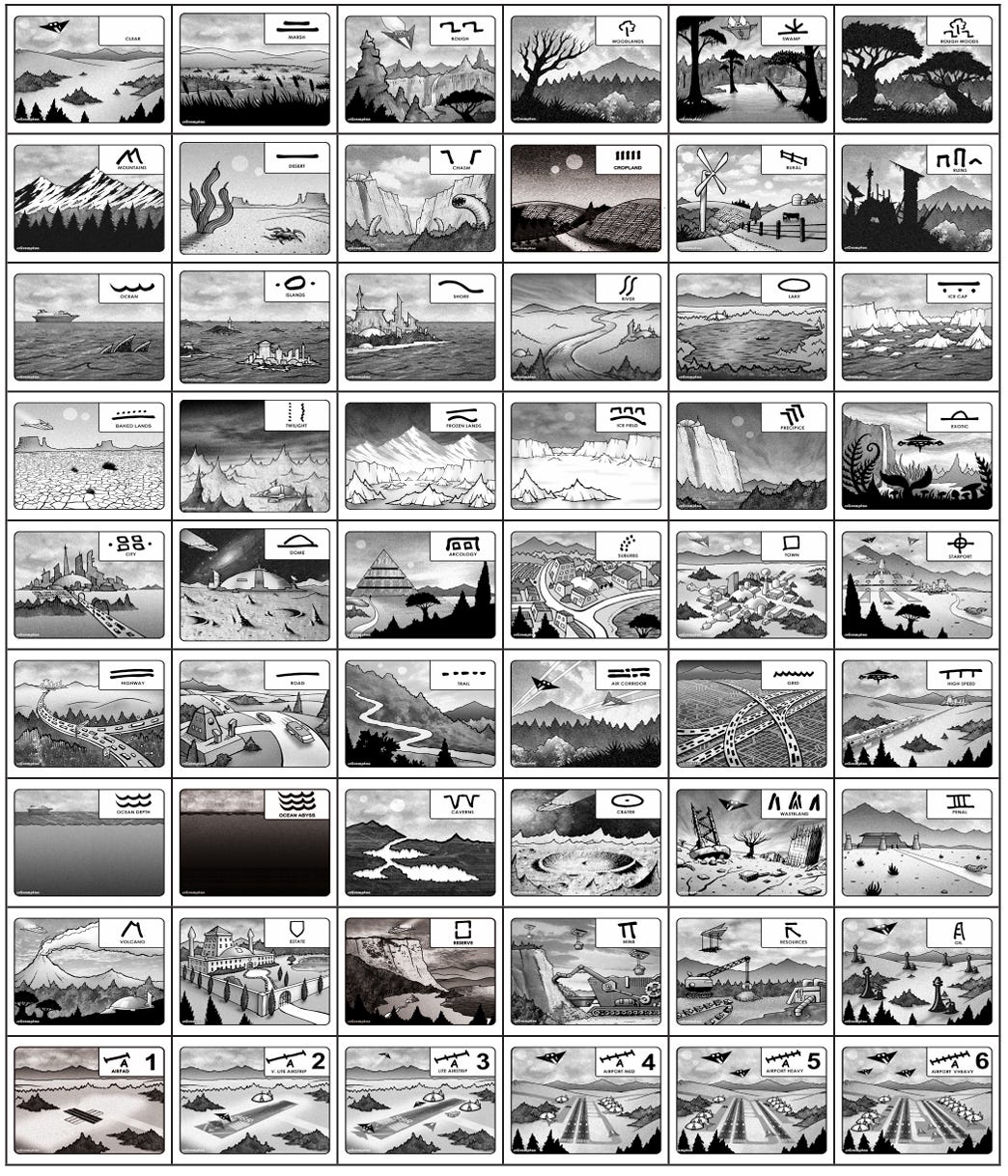
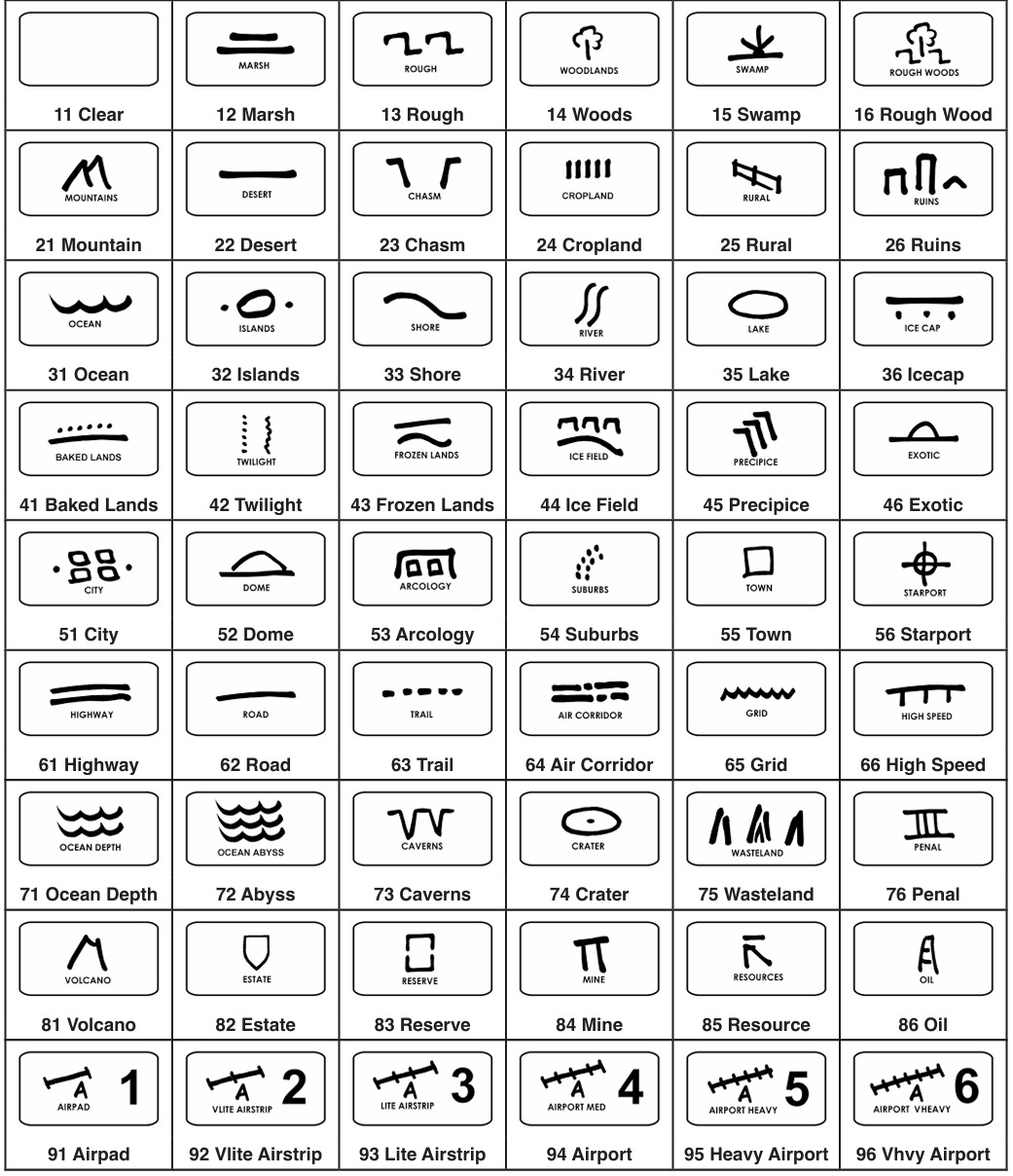
Anyways the terrain types represented in T5 here are fairly comprehensive, but they do something really excellent for planetary ground level combat, which is that they act as a natural metric for creating terrain.
OGRE/GEV, Battletech, and T5 represent combat on a layer of 100, 10, and 1km respectively. Any combat larger than that would be done in a similar fashion to F&E, using multiple counters per hex to represent entire forces or battalions, but simply playing it out the same way as OGRE/GEV.
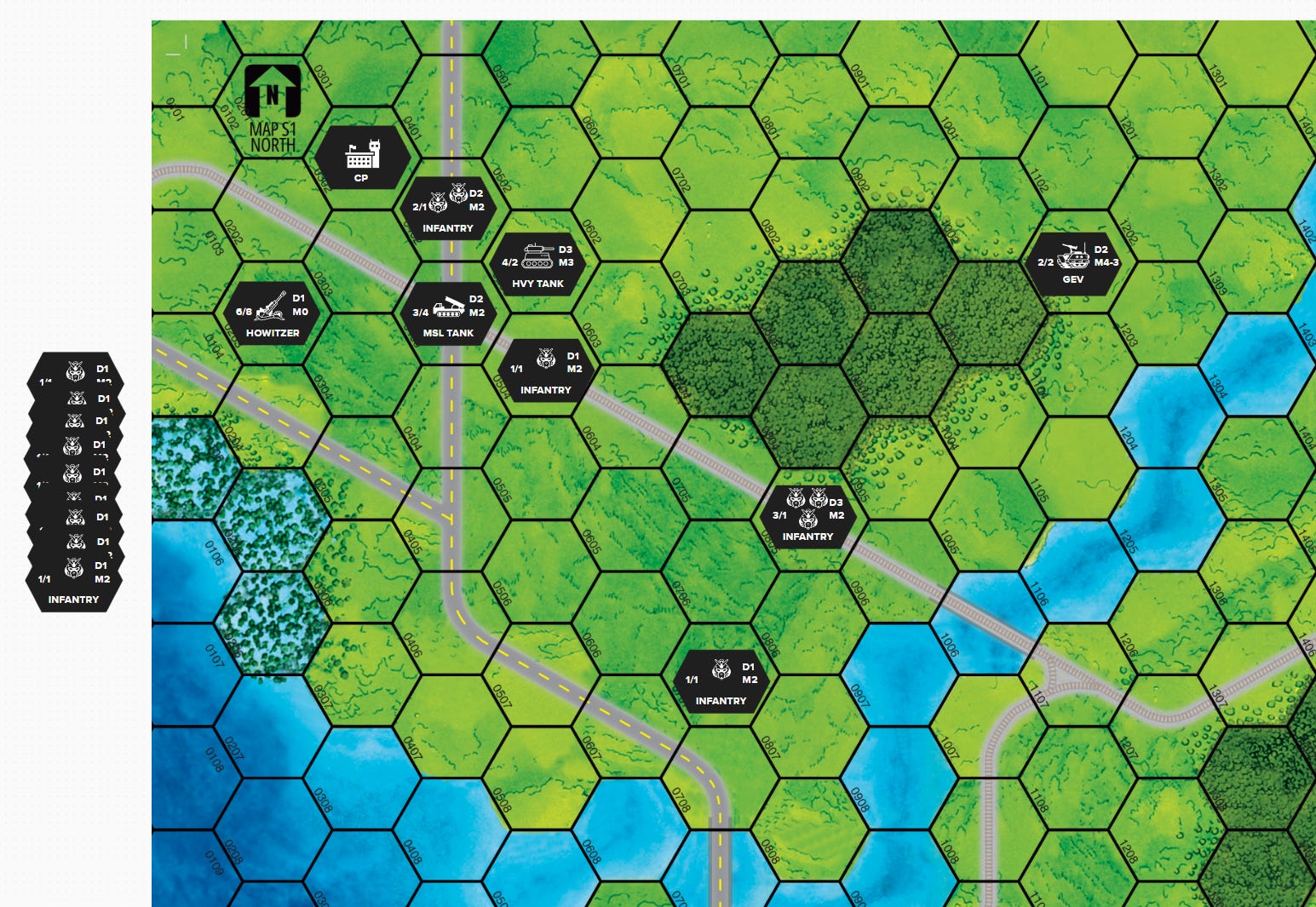
OGRE/GEV is such a wonderfully elegant and simple system, and I suppose I could use something more complex for this scale, but we are already bordering on insanity in terms of complexity so this is refreshing in comparison. Because it’s such a simple ruleset it’s trivial to add any number of extra unit types from sea-faring to air combat. While OGRE precludes orbital bombardment as a possibility due to its own makeup, there is nothing about Star Vanguard that would suggest it isn’t a possibility. Though OGRES themeselves may also be used here because I like them, and they are yet another thing that has tiny boxes to check off.
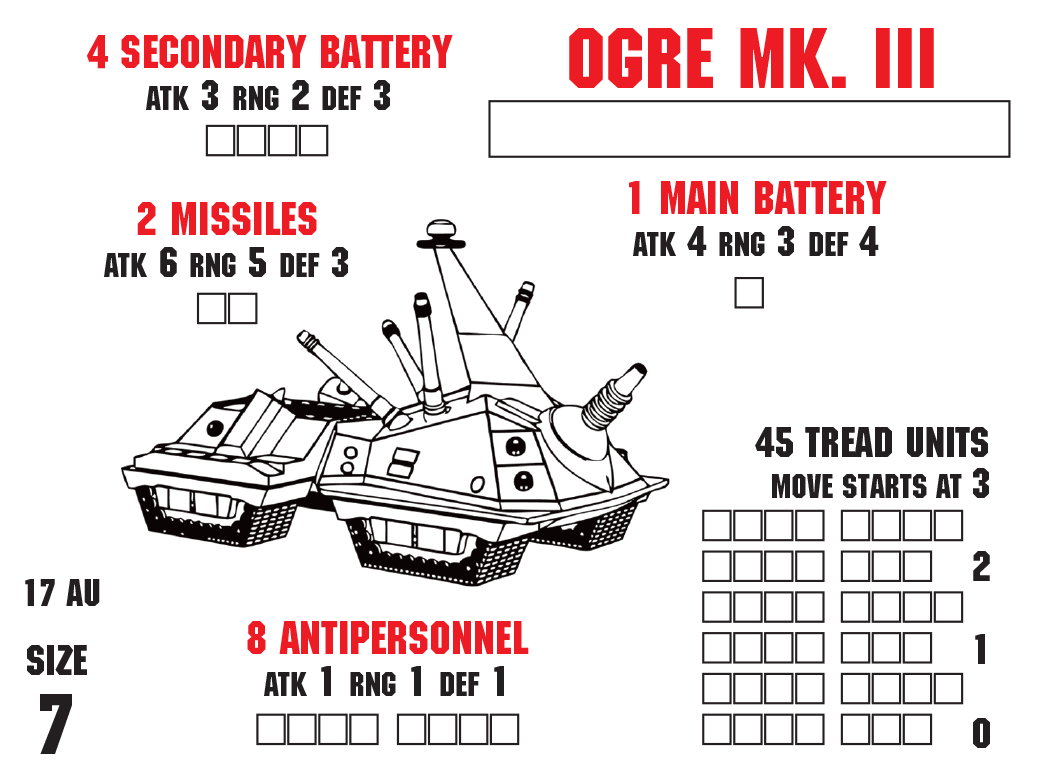
The idea of OGRES is that they are absolutely massive nuclear powered death machines, so even though the “infantry” represented in my implementation are actually guys in giant mechs represented by Battletech units and rules, an OGRE is still much, much larger. Though for the sake of salient scaling, I assume that GEV’s and tanks are larger still than Battlemechs. But this is just some kind of nerd filibustering at this point because the next part is kind of complicated but also imminently interesting.
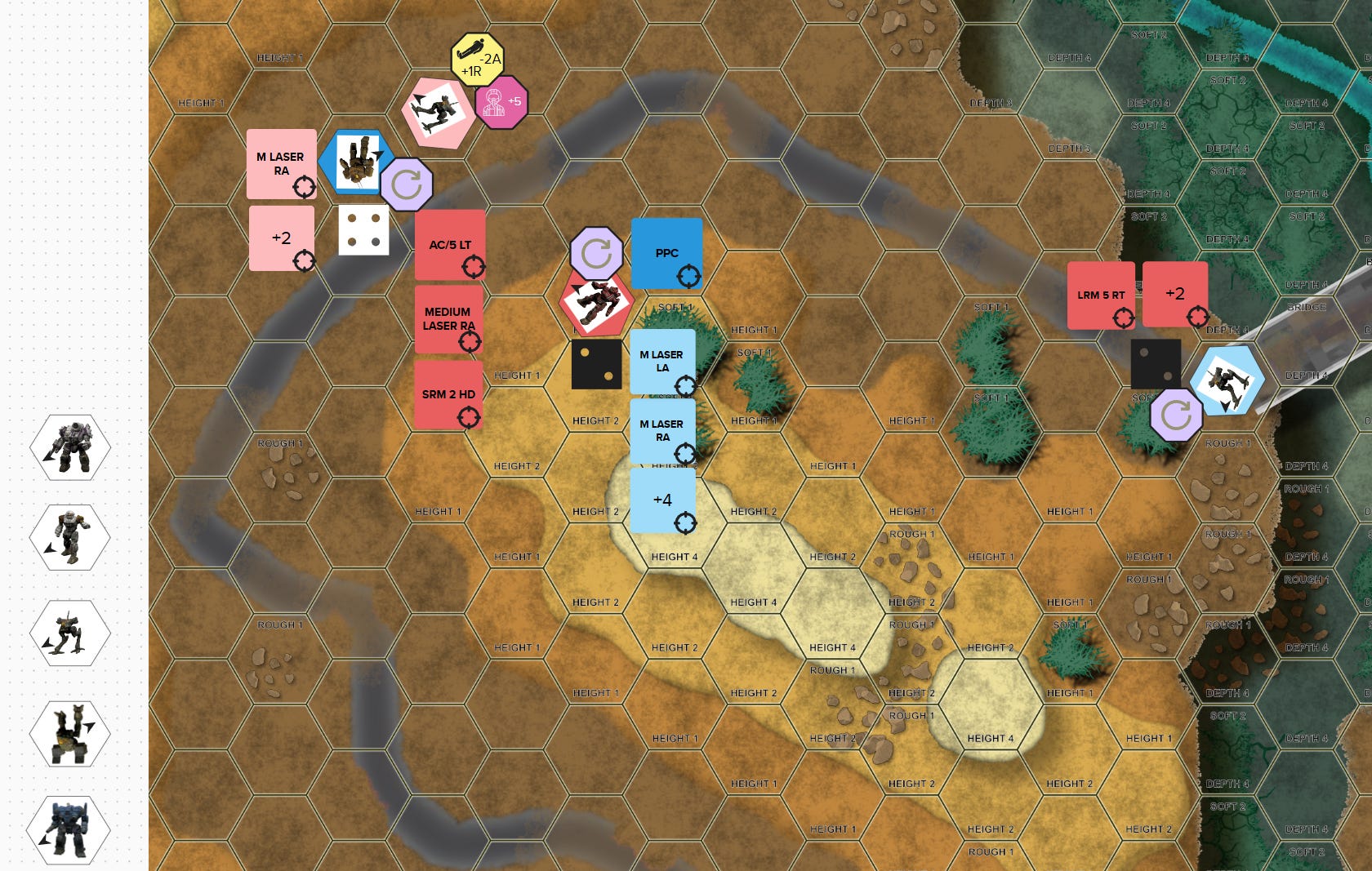
As demonstrated in previous blogs, I’ve built everything you could need for running a game of Battletech within Mural. And I’ve run several games with it, usually during long, exceedingly boring hours of nothingness in the middle of the night thanks to permanent insomnia. But this is where Traveller5 once again comes in to be the collective glue to tie all of these things together.
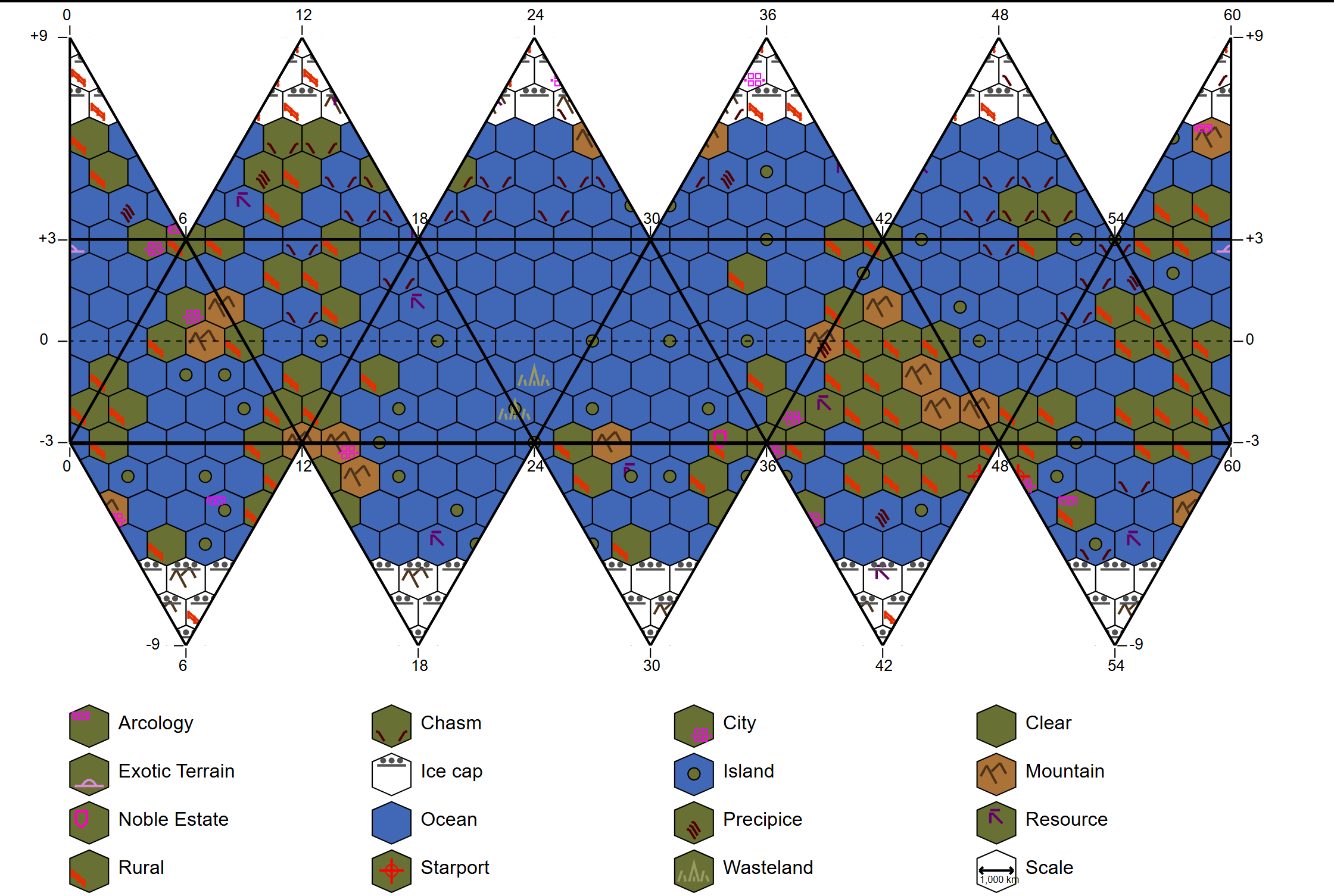
This is Traveller Worlds, an online app that acts as a viewer and generator for…Traveller worlds. It contains endless details beyond this that I won’t show here since they will look like gobbledygook to most. But this represents an entire planet. I have shown this before of course, but I want to dive deeper. Of course, if you wanted to represent a global war, all you’d have to do is copy this layout into Mural (or whatever) and then set up the forces and their units. I need to look further into F&E and its supply rules, since without supply lines, a game of this scale is a very boring thing in my opinion. But there are endless ways to implement them.
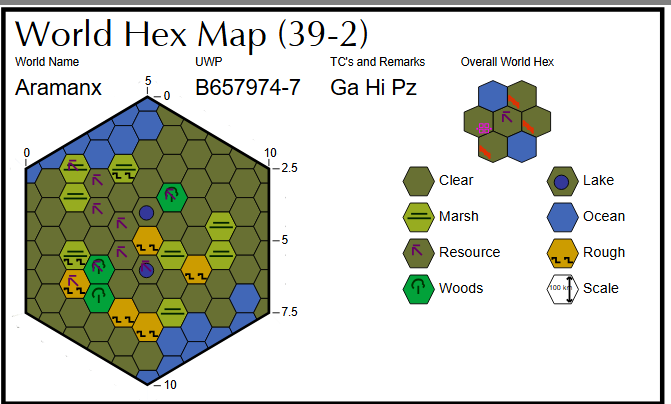
Now, if I click any individual hex here, it will scale down to 100km. This is probably a little bigger than desirable for standard OGRE/GEV combat, but concessions have to be made somewhere, so I’m willing to fudge the math a bit to make it work. I wouldn’t copy this map verbatim and throw it into OGRE, I would actually break it down a bit further, focusing on the general layout, and expanding the terrain so that each individual hex of unique terrain like rough, marsh, etc, is comprehensive of a larger area.
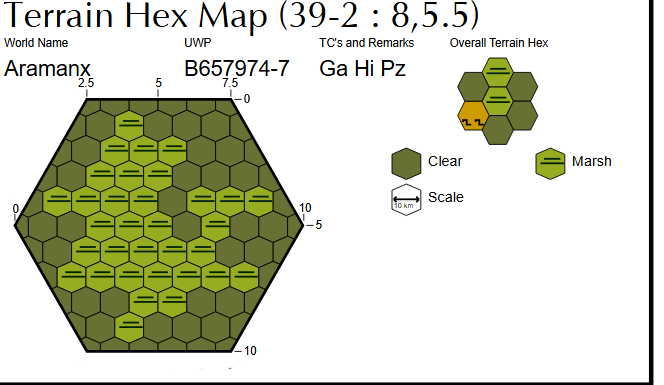
Once layer deeper, and we drop to 10km, which is where multi-squad/Battletech combat takes place. Again, this is a boring map on its own, and dropping down to a 1km layer isn’t much more interesting. So some creativity and extrapolation is necessary in order to produce interesting terrain for the purposes of a fun combat session.
But the fact that you CAN drop down to 1k from 1000 and that a tool does this all for you is insanely wonderful. Amarillo is surprisingly litigious…er…protective, of their properties. So the online tools and user content for SFB is scant, meaning a lot of the work will be on my shoulders. But Traveller is the complete opposite. It’s tools are expansive, from building entire sectors, to planets, to ship deck plans, and on and on.
At 1km, I can only really see a squad on squad combat being a thing, and that being handled with T5’s own deadly combat rules. I suppose there could be some variation in unit types and situations there, but again, T5 will be sufficient for handling those situations.
Anyways, this has already become excessively long. There is way too much to cover here. Systemizing all of this has taken months already, and has squarely put me in “they don’t actually play” territory in respect to my BRO bretheren, but this, to me, IS the play. I just like games, a lot. I like mechanics and design, a lot. So doing this to me is as much fun as actually running through the paces of these systems and turning them into real hard gameplay. I am putting a bunch of games together that were never meant to work together and realizing there is a surprising amount of natural synergy there, and that has really been eye opening.
Very interesting to read. Doing something along those lines, but at smaller scale (British Isles for now). But maybe I will ho further soon.
Also please keep posting about T5. I can't buy it for now, so I'll read other people's thoughts.